Bedding · The considered home
How to Choose Premium Bed Sheets for Your Sleep Style
A beautifully made bed begins with a detail that is felt more than seen. The right sheets balance texture, breathability, fit and care—not simply an impressive thread-count figure. Learn how to compare fibers and weaves, read the practical details, and find a sheet that feels right for the way you sleep.
There is a particular pleasure in slipping into a bed that feels composed: a cool, crisp surface beneath the hand, a smooth drape at the edge, a fitted sheet that stays put through the night. This is the quiet luxury of good bedding. It is not only a question of softness, nor is it necessarily a matter of choosing the most elaborate set. The best sheets are the ones whose feel, temperature and upkeep suit the rhythms of your own life.
When choosing premium bed sheets, begin with what you notice most at bedtime. Do you prefer a fresh, almost tailored crispness? A fluid, softly lustrous surface? Or a light, relaxed texture that lets air move freely? Fiber and weave help explain these differences more meaningfully than thread count alone. Then consider the less glamorous, equally consequential questions: mattress depth, laundry habits, climate and how much structure you want from the bed.
With those preferences in view, a sheet buying guide becomes less about chasing a universal ideal and more about understanding the options. Cotton percale, for example, has a matte finish and an airy, crisp feel that may appeal to warm sleepers or anyone who likes the sensation of freshly laundered hotel bedding. A sateen weave tends to feel smoother and drape more fluidly. Neither is automatically superior. Each creates a different experience.
Start with the sensation you want
Before comparing specifications, describe your preferred sleep surface in simple terms. “Crisp,” “silky,” “cool,” “substantial” and “relaxed” are more useful starting points than a long list of technical claims. Imagine the feeling you want at the end of a long day, and how that feeling might change with the season.
- For a cool, crisp bed: Look at cotton percale, whose plain-weave construction gives it a matte finish and a light, fresh hand.
- For a smoother, more fluid drape: Cotton sateen may suit you, with a surface that generally feels silkier and appears subtly lustrous.
- For a more relaxed impression: Consider lightly textured or softly finished fabrics, while checking the care label to understand how their texture is meant to be maintained.
- For a balanced everyday feel: Prioritize a fiber and weave that feel comfortable in your room’s usual temperature and fit the amount of care you are willing to give.
These are useful tendencies, not guarantees. Fiber quality, yarn, finishing and construction all influence the final hand of a fabric. Even two cotton percale sets can feel different. If possible, handle a fabric sample or feel the material in person; if shopping online, look for clear descriptions of fiber content, weave, finish and care rather than relying on a single adjective such as “luxurious.”
Fiber first: what the label can tell you
A sheet’s fiber is the raw material from which its character begins. Cotton is a familiar choice for its versatility, and different cotton sheets can feel quite distinct depending on yarn, weave and finishing. Long-staple cotton fibers are often used in finer, smoother fabrics, but the phrase alone does not describe the complete quality of a finished sheet. A well-made textile is the result of many decisions, from the yarn to the final construction.
Other fibers bring their own qualities and considerations. Linen, made from flax, is known for a naturally textured appearance and an easy, relaxed drape. Silk feels smooth and has a distinctive handle, but it usually asks for more delicate care. Blends may be designed to change the feel, price or maintenance demands of a fabric. Read the full composition, and be wary of vague language that leaves the actual fiber content unclear.
For sensitive skin or a preference for particular environmental standards, investigate the details rather than assuming that a natural-sounding name tells the whole story. Check what a certification covers, who issued it and whether it applies to the specific product or material you are considering. A clear label and transparent care instructions are often more informative than broad claims about purity or performance.
Fiber also matters at laundry time. Some fabrics tolerate regular machine washing with ease; others may need a gentler cycle, lower temperatures or more careful drying. A sheet that feels exquisite but demands a routine you dislike may not be the most practical choice for everyday use. The most successful bedding makes a place for comfort and real life in equal measure.
The weave changes the mood
Weave describes how yarns cross to form a fabric, and it has a strong influence on surface, drape and airflow. For shoppers comparing cotton sheets, percale and sateen are two of the most familiar terms. They are not fiber names: both can be made from cotton, but their different constructions create different tactile impressions.
Percale: crisp and breathable
Percale is made with a simple one-over, one-under structure. The result is commonly described as crisp, light and matte, with an airy feel against the skin. This makes cotton percale sheets a natural place to begin if you tend to sleep warm, live in a warm climate or simply enjoy a clean, freshly pressed quality. Percale can feel a little structured at first and often becomes softer with use and laundering, depending on the fabric and how it is cared for.
It is worth distinguishing breathable from weightless: percale’s exact feel depends on the fabric’s yarn and construction. Look beyond the name for the listed fiber, finishing and care instructions. A relevant example is the Luxor Fitted Sheet, described as 100% Egyptian cotton in a percale weave, with a cool, crisp feel and matte finish. Its hemstitch detail adds a restrained finish, while the listed care guidance calls for a gentle machine wash and low-heat tumble drying.
Sateen: smooth and softly luminous
Sateen is woven to bring more yarn floats to the fabric surface, creating a smoother hand and a gentle sheen. It often has a more fluid drape than percale and may appeal if you prefer a soft, enveloping sensation rather than a crisp one. That smoother surface can feel inviting in a cool room, though personal comfort depends on many factors, including sleep temperature, bedding layers and the climate of the bedroom.
In choosing between the two, think of the difference as a matter of character: percale is tailored and fresh; sateen is sleek and flowing. Both can be made into refined, durable bedding. Your preference—not a hierarchy of luxury—should guide the decision.
Thread count: useful context, not a verdict
Thread count is commonly presented as a shorthand for sheet quality, but it does not tell the whole story. It refers to the number of threads counted within a defined area of fabric, and the way it is calculated can vary. A high figure does not automatically mean a sheet is softer, more breathable or longer-lasting. Fiber quality, yarn construction, weave and finishing deserve just as much attention.
Rather than treating one number as a score, use thread count as one point of reference alongside the fabric description. Ask whether the sheet is percale or sateen, what fiber it contains, how it feels and how it should be laundered. A moderate-count percale may be a better match for someone who wants a light, crisp sheet than a denser fabric that feels smoother or heavier. Conversely, someone who values a soft drape may find a sateen more appealing.
When product descriptions emphasize a dramatic number but provide little information about material and construction, proceed thoughtfully. Quality is tactile and technical at once. The details that shape your nightly experience are more useful than a number displayed without context.
Match the sheet to your sleep style
Sleep preferences are individual, and the right sheet is part of a larger environment that includes room temperature, mattress, duvet and personal comfort. These practical profiles can help narrow the field without turning a preference into a rule.
- If you tend to sleep warm: Start with a lighter-feeling fabric and a weave associated with airflow, such as cotton percale. Consider the weight of your duvet and mattress protector too; sheets are only one layer of the sleep system.
- If you like a smooth surface: Compare sateen and other fabrics described as smooth or fluid. Confirm that the care routine is manageable, especially if the fabric needs more attention than your usual laundry.
- If you prefer a crisp bed: Percale is worth exploring. Its matte finish and fresh hand can deliver a more structured impression than a lustrous sateen.
- If you are sensitive to texture: Seek a clear description of the fabric’s finish, and, where possible, feel a sample. Words such as “soft” can mean different things to different people.
- If your preferences shift by season: You may prefer a breathable sheet year-round and adjust warmth with blankets, or keep a second set with a different texture for seasonal changes.
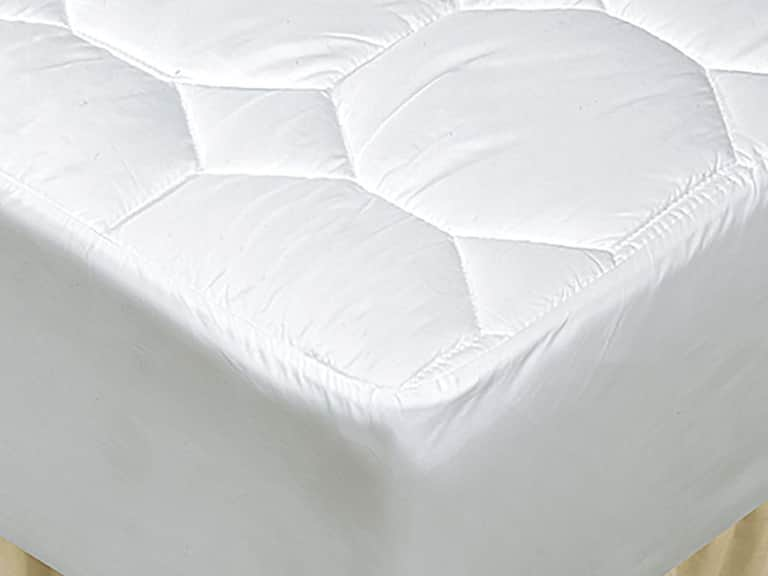
Do not overlook the feeling of the whole bed. A tightly made surface, a properly fitted sheet and bedding layers suited to the room can make even a simple palette feel considered. If you use a separate mattress pad, account for its added height when measuring the mattress, since it can affect how securely the fitted sheet sits.
A precise fit makes the bed feel finished
Even excellent fabric can disappoint when it bunches, slips or strains at the corners. Before ordering, measure the mattress rather than relying only on its size label. Note its length and width, then measure its height from the base to the top surface. Include any mattress topper or pad that will remain beneath the sheet. A fitted sheet needs enough pocket depth to accommodate the complete stack, with a little room for the fabric to tuck securely.
Check whether the listed dimensions correspond to your mattress size, particularly if you have a Twin XL, California King or split King. For adjustable beds, find out whether the set includes one fitted sheet or separate Twin XL fitted sheets; do not assume the configuration from the name alone. Elastic placement and construction also matter. A secure fit helps keep the sleeping surface smooth and reduces the small nightly annoyance of corners working loose.
Mattress depth can vary considerably between models, and bedding layers can change the effective depth. If measurements sit close to the sheet’s maximum pocket depth, consult the manufacturer’s sizing information before deciding. The aim is not simply to cover the mattress but to create a surface that remains comfortable and composed as you move.
When a mattress pad is part of your setup, choose one that fits the mattress and consider its effect on total depth. A cotton-filled option such as the Downtown Company Luxury Cotton Mattress Pad is described as having 18-inch deep pockets and a flexible skirt. That detail can be useful when planning a bedding system, but the final fit still depends on the dimensions of your mattress and any additional layers.
Care is part of the choice
Premium sheets are made to be lived in. A considered care routine helps preserve their feel and appearance, but it should begin with the instructions for the specific fabric. Fiber, color and finishing can all affect how a sheet responds to washing. Treat the care label as part of the buying decision, not a footnote to discover after the first laundry day.
In general, washing sheets with similar colors and fabrics helps avoid unwanted transfer or abrasion. Use a cycle and temperature appropriate to the label, and avoid adding more detergent than needed. Residue can affect how fabric feels. High heat may be hard on fibers over time, so follow the recommended drying temperature and remove sheets promptly if you want to reduce deep creasing. These are broad habits, not substitutes for the maker’s instructions.
Some people enjoy the relaxed look of a softly rumpled sheet; others prefer a smooth, pressed finish. Neither is more correct. Your choice of weave can influence how much structure or drape the bed appears to have, while drying and ironing habits shape the final presentation. If ironing feels like an unwelcome chore, choose a fabric and finish whose natural appearance you enjoy.
For a new set, laundering before use can help remove packaging and bring the fabric into its everyday condition, provided the care instructions allow it. Avoid bleach or fabric softener unless the manufacturer explicitly permits them. In the case of the Luxor Fitted Sheet, the listed instructions advise against both, with warm washing on a gentle cycle and low-heat drying. Checking these details in advance makes the care routine—and the sheet itself—more predictable.
A refined bedroom is built in layers
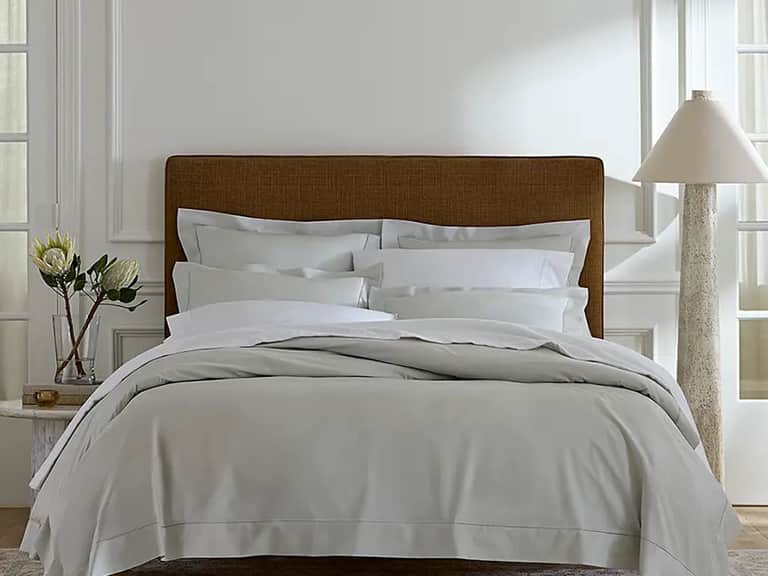
Sheets set the sensory foundation of the bed, but their visual effect is strongest when they belong to a coherent composition. Begin with a palette that feels restful to you: chalk, soft white, stone, muted blue or warm neutral tones can all create a calm backdrop. The goal is not to imitate a hotel room exactly, but to decide which parts of that polished feeling suit your own space.
Texture can add depth without introducing visual clutter. A crisp percale sheet against a softly woven duvet cover creates quiet contrast; a sateen surface brings a subtle sheen that may work beautifully with matte furnishings. Keep decorative layers purposeful. A pair of well-chosen pillowcases, a neatly folded coverlet or a textured throw can make the bed feel complete without obscuring the practical comfort underneath.
Consider the way the room is used, too. Natural light, temperature and the amount of time you want to spend making the bed all inform the right arrangement. An elegant bedroom need not be formal. When the linens feel inviting and are easy to care for, the space becomes a retreat rather than a set piece.
A practical sheet-buying checklist
Before choosing a set, take a moment to compare the details that most directly affect comfort and everyday use:
- Feel: Do you want crisp and matte, smooth and lustrous, or light and relaxed?
- Fiber: Is the composition clearly stated, and does it suit your preferences?
- Weave: Does the construction match the texture and breathability you are seeking?
- Thread count: Is it presented alongside useful information about the fabric rather than as the sole quality claim?
- Fit: Have you measured the mattress, including any topper or pad, and confirmed the pocket depth?
- Set contents: Are the fitted sheet, flat sheet and pillowcases the sizes and quantities you need?
- Care: Are the washing, drying and ironing instructions compatible with your routine?
- Season and room: Does the fabric make sense for your climate, preferred bedding layers and typical bedroom temperature?
This list helps keep the decision grounded. It also makes comparisons fairer: a percale set and a sateen set may serve different preferences, so a simple ranking is less useful than asking which one fits your priorities.
The final measure: how you want to wake
The most thoughtful sheet buying guide does not end with a single “best” fabric. It ends with a clearer understanding of what you want from your bed. If you wake feeling overheated, a light, breathable-feeling weave may be a sensible place to start. If you love a silky drape, a smoother surface may feel more satisfying. If you value the cool, composed quality of a neatly made bed, cotton percale offers a classic expression of that mood.
Look for transparent information, measure carefully and take care instructions seriously. Let thread count inform rather than dictate. Most of all, choose for the experience you will have night after night, not just the impression a product description makes at first glance. Premium bedding is at its best when comfort, craftsmanship and practicality settle into a natural balance—a small, daily luxury that feels entirely your own.