Bedding · The comfort edit
Sheet Sets That Stay Put on Adjustable Beds: Fit, Fabric, and Care
A bed that moves should not leave its sheets behind. The right fitted sheet brings together precise dimensions, resilient elastic and a fabric that feels inviting through every change of position—so the bed remains composed, comfortable and ready for rest.
An adjustable bed offers a more personal approach to comfort. The head can rise for reading, the legs can lift to ease into relaxation, and a split configuration can let two sleepers choose different positions. But every adjustment changes the relationship between mattress, frame and bedding. Fabric stretches across new angles; the fitted sheet is asked to flex, then settle back into place. A sheet that feels perfectly adequate on a stationary bed may pull free at a corner when the base moves.
The answer is not simply to buy the deepest fitted sheet available. A secure fit depends on matching the sheet to the mattress itself, understanding how the base articulates, and choosing construction that can move without becoming slack. Fabric matters too: crisp percale and smooth sateen can both work beautifully, provided the sheet is accurately sized and its elastic is thoughtfully designed. With a little attention to fit and care, an adjustable bed can feel as polished as it is adaptable.
Why adjustable beds ask more of a sheet
On a flat bed, a fitted sheet wraps around a relatively stable rectangle. When an adjustable base changes position, that surface bends at one or more points. The mattress may flex with the frame, while the sheet must accommodate the changing shape without losing its hold. This movement can create tension near the corners, tug fabric toward the center, or expose a side of the mattress that was covered moments earlier.
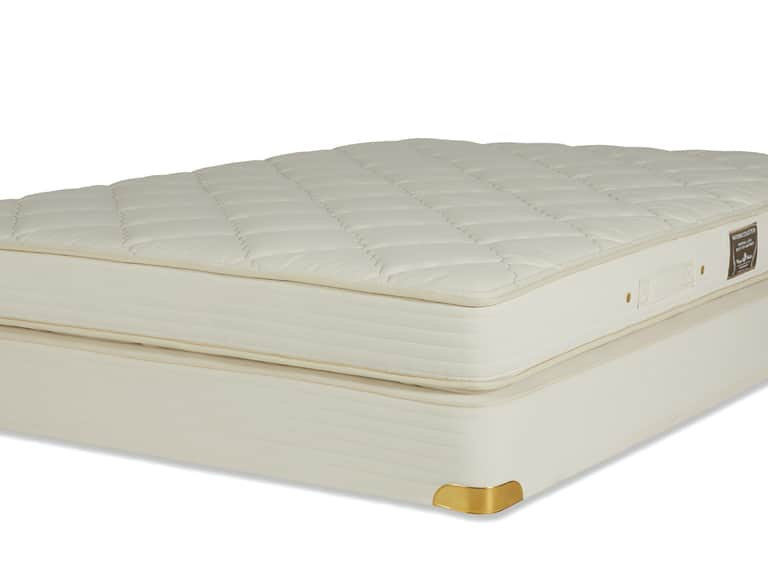
The challenge can be more noticeable with thicker mattresses, pillow tops, added toppers or mattress protectors. Each layer increases the height the sheet must cover, and a plush surface may shift differently from a firm one. Meanwhile, a fitted sheet that is too large can gather into folds and feel untidy; one that is too shallow may strain at the seams or slip off during articulation. In other words, a neat fit is a matter of proportion, not excess fabric.
The movement of the frame matters as well. A single adjustable base generally changes the angle of the entire mattress together. A split king, by contrast, commonly uses two Twin XL mattresses, each of which can move independently. That arrangement calls for two separate fitted sheets sized to the individual mattresses, rather than one oversized sheet stretched across both sides. The top sheet and duvet can bridge the center, but the fitted layers need to follow the bed’s actual configuration.
Start with an exact measurement
Before comparing fabrics or thread counts, measure the mattress. Check its width and length, then measure its depth from the bottom edge to the highest point of the sleeping surface. Include any topper that will remain on the bed, and account for a mattress protector if it adds meaningful height. Do not rely on a general description such as “deep pocket” to guarantee compatibility: pocket-depth terminology is not always used consistently between makers.
A fitted sheet’s stated pocket depth should be sufficient to cover the mattress and tuck beneath its edges, with enough allowance to stay secure as the surface bends. A little extra depth can be useful, particularly with a substantial mattress or topper, but too much can leave loose material that shifts with movement. Compare the measured depth with the sheet’s stated dimensions and, where available, the manufacturer’s guidance on mattress compatibility.
- Measure the complete sleep surface. Include a topper or pad that stays on the bed night after night.
- Confirm the mattress size. Twin XL and standard Twin are different lengths; split-king configurations usually require two Twin XL fitted sheets.
- Check the pocket depth. Look for the actual measurement rather than relying on a vague label alone.
- Consider the base’s movement. A fitted sheet should cover the mattress securely when flat and remain comfortable as it articulates.
Elastic and construction: the quiet details that matter
Elastic is easy to overlook because it is hidden beneath the mattress. Yet its placement and resilience play a central role in sheet fit. A fitted sheet with elastic running around the full perimeter can help distribute tension more evenly than one secured only at the corners. Deep hems, reinforced stitching and well-finished seams also contribute to a more dependable everyday fit.
Elastic needs to hold without creating excessive strain. If it is stretched to its limit over a mattress that is too deep, it may pull the corners inward, stress the seams or gradually lose its recovery. On the other hand, elastic that is too loose cannot keep the sheet neatly anchored. When evaluating a sheet, consider whether the construction is intended for your mattress depth and whether the corners can tuck far enough beneath the mattress to stay in place.
A fitted sheet that slips despite appropriate dimensions may be affected by more than its elastic. A smooth mattress cover or mattress protector can reduce friction, while movement can draw any slightly loose fabric out of position. First check that the sheet is oriented correctly, with the long sides and short sides aligned to the mattress. Then smooth it across the surface and make sure each corner is fully seated. If it still shifts, recheck the combined depth of all bedding layers before trying accessories such as sheet straps.
Choose a fabric by feel, climate and routine
The best sheet set is one you enjoy using. Fabric influences texture against the skin, airflow, drape and the way the bed looks when made. It does not determine whether a sheet will stay on an adjustable mattress—that depends chiefly on dimensions and construction—but a fabric that suits your sleeping preferences can make the whole arrangement feel more considered.
Cotton percale: crisp and breathable
Percale is a plain weave, often recognized by its fresh, matte hand and light, airy character. Many sleepers appreciate its crispness, particularly in warmer rooms or when they tend to sleep hot. Percale can soften with use and washing, while retaining a clean, tailored look. It may wrinkle more readily than smoother weaves, so the choice is partly a matter of whether you like a relaxed finish or prefer to remove sheets from the dryer promptly.
A relevant example is the Sleep & Beyond 100% Organic Cotton Percale Sheet Set. Its product details describe an airy cotton percale fabric and a fitted sheet with deep pockets designed to fit mattresses up to 18 inches deep. The set is also listed as suitable for adjustable beds, with the Split King configuration including two Twin XL fitted sheets. As with any sheet, confirm the dimensions against the particular mattress and any layers on top of it.
Cotton sateen: smooth and softly lustrous
Sateen is made with a weave structure that brings more yarn across the surface, creating a smoother hand and a subtle sheen. It tends to drape differently from percale, offering a softer, more fluid appearance on the bed. Some sleepers prefer that silky surface, especially in cooler weather; others find the crispness of percale more refreshing. Neither weave is universally superior. The right choice is the one that feels comfortable in your own sleep environment.
Sateen may show creases differently from percale and can be sensitive to rough laundering or high heat. If softness and a polished surface appeal, follow the care label carefully and avoid treating a high thread count as a shortcut to quality. Fiber, yarn, weave, finishing and construction all contribute to the feel and performance of a sheet set.
Other fibers and blends
Linen has a distinctive textured hand and a relaxed drape, while silk offers a smooth, delicate surface. Blended fabrics can combine qualities from different fibers, and some may include a small amount of stretch. The important point for an adjustable bed is to assess the fitted sheet as a complete construction: fiber content, sizing, pocket depth, elastic and care requirements. A naturally breathable fabric can add to comfort, but it cannot compensate for a poor fit.
Thread count is only one part of the story
Thread count is often presented as a quick measure of luxury, but it tells only part of the story. It refers to the number of threads in a square inch of woven fabric, and figures are most useful when compared within similar fiber and weave categories. A higher number does not automatically mean a better sheet, a cooler night or a more secure fit on an adjustable bed.
For a more meaningful comparison, consider the cotton quality, the weave, the fabric weight, the finishing and the quality of the fitted-sheet construction. Then return to the practical questions: does the sheet suit the mattress depth, can it accommodate movement, and does it feel good against the skin? A well-chosen moderate thread count in a breathable percale, for example, may be more comfortable for a warm sleeper than a heavier fabric selected solely for a larger number.
Split beds need a split-minded approach
A split adjustable bed can make personalized positioning possible without asking both sleepers to adopt the same angle. That convenience affects bedding choices. In a split king, each side is typically a Twin XL mattress. Separate fitted sheets allow each mattress to move independently and help prevent the center of a single sheet from being pulled or stretched as one side rises.
The upper layers can be adapted to your preference. Some households use a king-size top sheet or duvet across the full bed; others prefer separate covers for greater independence. Whichever arrangement you choose, make sure each fitted sheet is sized for the individual mattress and that the base can move through its usual positions without tugging the bedding between sides. When ordering a set, read the included-piece list closely: “Split King” can refer to a particular combination of flat sheet, fitted sheets and pillowcases.
Care that protects the fit
Even a beautifully constructed sheet can lose its best qualities when exposed to harsh or inconsistent care. Washing and drying according to the fabric’s instructions helps preserve softness, color and elastic recovery. As a general practice, avoid overloading the washing machine, use an appropriate amount of detergent and keep high heat to a minimum unless the care label specifically permits it.
- Wash on the recommended cycle. Follow the care label; many cotton sheets can be machine washed, but temperatures and cycle settings vary.
- Separate like colors. This helps reduce color transfer and allows the fabric to move more freely in the wash.
- Use heat thoughtfully. High dryer temperatures can stress fibers and elastic. Remove sheets promptly to limit deep creasing.
- Store fully dry. Make sure sheets are dry before folding them away to keep the linen cupboard fresh.
- Rotate sets. Alternating between sets gives each one time to rest and can help distribute regular wear.
If a fitted sheet begins to loosen, consider whether the cause is wear, shrinkage or a change in the bed’s layers. A newly added topper can make a previously suitable pocket too shallow; frequent hot drying can affect both fabric and elastic over time. Re-measuring the assembled mattress is often more useful than immediately buying a larger sheet, since excess depth can create its own fit problems.
A simple fit test before bedtime
Once the bed is made, try it through the positions you use most often. Raise and lower the head and foot sections, then inspect the corners and sides. The fitted sheet should remain beneath the mattress without pulling sharply, and the sleeping surface should stay smooth enough to feel comfortable. A little movement in the fabric is normal; a corner that repeatedly pops free or a seam that appears under strain is a sign to reassess the size or fit.
This practical test also makes it easier to spot issues before they become nightly irritations. Check that fitted sheets on a split bed do not bridge the gap between independently moving mattresses, and make sure a flat sheet or duvet is not caught in the mechanism. Follow the adjustable-base manufacturer’s safety guidance, keeping loose fabric clear of moving parts.
A more restful fit, by design
An adjustable bed can change how a bedroom works, but the bedding should still feel effortless. Begin with a precise mattress measurement, choose a fitted sheet with suitable pocket depth and resilient construction, and select a fabric that complements your preferred temperature and texture. For a split configuration, size each fitted sheet to its own mattress. Then let thoughtful care preserve the fit you worked to find.
The result is not merely a sheet that stays in place. It is a bed that feels composed whether it is flat, gently inclined or arranged for a moment of quiet reading. When fit, fabric and care are in balance, the mechanics fade into the background—and comfort becomes the most noticeable detail.