Bedding · Textile guide
Cotton Pillowcases, Explained: Percale and Sateen in Bovi Collections
A pillowcase is a small daily luxury with a surprisingly large effect on how a bed feels. In cotton, the distinction between percale and sateen is less about a simple ranking of quality than about the character of the weave: crisp or silky, matte or softly luminous, cool-feeling or gently draped.
In Bovi’s collections, these two cotton traditions offer different ways to finish the bed. Understanding their texture, construction, breathability and care can make choosing pillowcases more intuitive—and help you create a sleep space that feels considered rather than merely coordinated.
The weave is part of the experience
When evaluating cotton pillowcases, it is natural to begin with the fiber. Cotton type, staple length, yarn quality and finishing all contribute to the fabric’s character. But the way those yarns cross one another matters just as much. Weave influences the surface that touches your cheek, the way a pillowcase falls around a pillow, and whether the finish reads as crisp and understated or smooth and faintly glossy.
Percale and sateen are both cotton weaves, not separate fibers. A percale pillowcase can be made from excellent cotton, as can a sateen one; neither weave automatically guarantees superior quality. They simply produce distinct results. Percale is known for a clean, matte surface and a cool, crisp hand. Sateen tends to feel smoother and more fluid, with a subtle sheen created by its weave structure.
That distinction is especially noticeable in pillowcases. The fabric rests directly against the face and hair, so small differences in texture may feel more apparent than they do across a larger sheet. Preferences are individual: some sleepers relish the fresh, freshly laundered character of percale, while others gravitate toward sateen’s soft glide and elegant drape.
Percale: crisp, breathable and quietly tailored
Percale is typically woven in a simple one-over, one-under pattern. The balanced construction creates a smooth, even surface with a dry, crisp hand and a matte appearance. It has a fresh quality that can feel reminiscent of well-made hotel linen: composed, clean and pleasantly cool against the skin.
Because percale has an open, straightforward weave structure, it is often appreciated for its airy feel. That can make it appealing to people who tend to sleep warm or prefer bedding that does not feel heavy. The fabric’s crispness is not the same as stiffness. With regular laundering, good cotton percale can soften while retaining its characteristic fresh, light texture.
In Bovi’s pillowcase collections, Classic Hotel offers a clear expression of percale’s tailored appeal. Made from cotton in a 200-thread-count percale weave, it has a breathable, crisp feel and a restrained embroidered border. The detail is decorative without becoming ornate, which allows the pillowcases to sit comfortably within a range of bedroom styles.
Magnolia pillowcases and shams also use cotton percale. Their cool, matte finish gives the bed a clean outline, while the framed border adds a measured note of refinement. For anyone drawn to a bedroom that feels light, orderly and easy to refresh, this combination of texture and detail can be especially appealing.
Percale’s visual simplicity also makes it versatile. It pairs naturally with linen, textured quilts and softly colored blankets, and it can bring balance to a bed layered with decorative stitching or a more elaborate duvet cover. Its understated finish lets construction and proportion take the lead.
Sateen: smooth, fluid and softly luminous
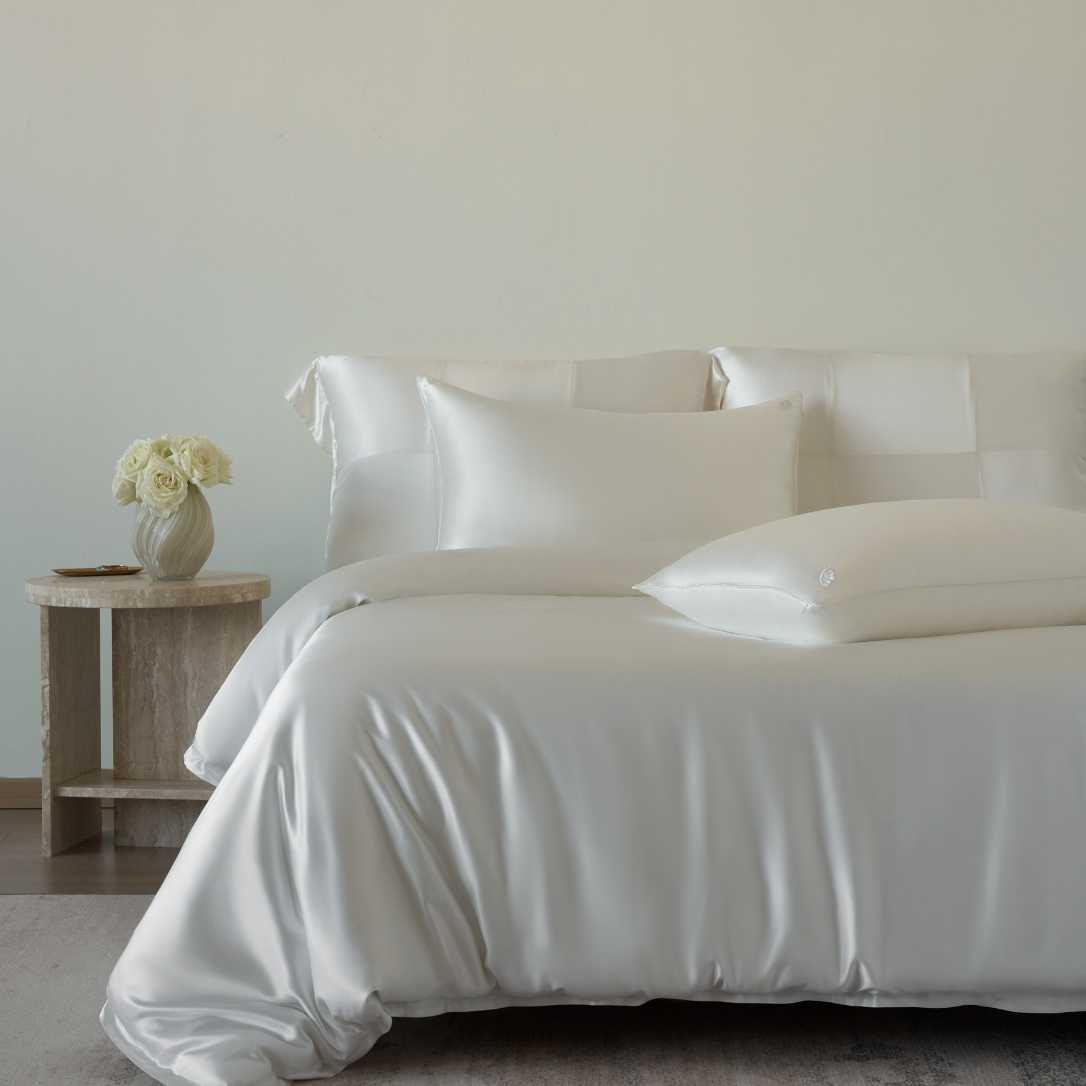
Sateen uses a different arrangement of yarns, with more threads passing over the surface. That structure gives the fabric a smoother hand and a gentle sheen. Rather than the crisp, dry character of percale, sateen usually feels supple and slightly more fluid, with a soft drape that brings quiet polish to the bed.
The sheen is subtle, not metallic or mirror-bright. It catches light softly and can make a neutral pillowcase look especially rich, while remaining appropriate for everyday use. Sateen’s smoothness may appeal to sleepers who enjoy a silky-feeling surface or want their bedding to feel enveloping rather than crisp.
Bovi’s Pearls pillowcases and shams illustrate the more decorative side of sateen. The cotton fabric has a 300-thread-count sateen weave, and a French-knot embroidered border contributes dimension without overwhelming the smooth surface. The result is a pillowcase that feels polished yet composed, its detail best understood up close.
For a more tailored interpretation, Malone pillowcases and shams pair cotton sateen with an embroidered border and contrast flange. Sateen’s natural drape helps the trim feel integrated rather than rigid, creating a finish that is decorative but still suited to a restful bedroom.
Estate pillow shams use long-staple cotton in a 500-thread-count sateen weave. Their smooth, luminous hand and refined trim options show how sateen can support a more formal, hotel-inspired arrangement. A sham is generally styled as a decorative cover rather than used in the same way as a pillowcase, but its surface can help complete the visual language of the bed.
Although sateen is often described as warmer than percale, actual comfort depends on more than weave alone. Room temperature, fill, personal sleep habits and the weight of the rest of the bedding all play a role. Think of “cool” and “warm” as useful impressions of texture rather than guarantees of a particular sleeping temperature.
Percale vs. sateen: the differences at a glance
Choosing between the two is easiest when you focus on the qualities you notice most. The following comparison is a practical guide, not a strict rule: cotton quality and finishing can create variation within either weave.
- Surface: Percale is generally matte and crisp; sateen is smoother, with a soft sheen.
- Hand feel: Percale feels fresh and dry; sateen feels supple and silky.
- Drape: Percale tends to hold a cleaner, more structured line; sateen falls with a fluid softness.
- Breathability: Both are cotton and can be comfortable, though percale’s open, balanced construction is often associated with an airy feel.
- Styling: Percale lends itself to a relaxed, hotel-like crispness; sateen brings a polished, softly luminous finish.
- Maintenance: Both benefit from following the maker’s care label, using appropriate wash settings and avoiding unnecessarily harsh treatment.
Thread count may help describe a fabric, but it cannot tell the whole story. The number reflects how many threads are counted within a specific area, and counting practices can vary. Fiber quality, yarn construction, weave and finishing all influence the finished hand. A higher number is not, on its own, proof that a pillowcase will feel better or last longer.
How to choose a pillowcase for your sleep style
Start with sensation. If you prefer a crisp surface that feels light and fresh, percale may be the more natural choice. If you like a smooth glide and a softer, more dressed appearance, sateen may suit you better. Neither is inherently more luxurious; the better option is the one you are glad to return to at the end of the day.
Consider your bedroom’s temperature and the rest of your bedding, too. In a warm room, a breathable-feeling percale pillowcase can complement a lighter duvet and uncluttered layers. In a cooler space, sateen’s smoothness may feel especially inviting alongside a quilt or coverlet. Seasonal changes do not require replacing an entire bedding set: changing pillowcases can subtly shift the sensation and look of the bed.
Skin and hair preferences can also influence the decision, but claims should be kept in proportion. A smoother surface may feel gentler to some people, while others prefer the dry touch of percale. Individual experiences vary, and a pillowcase cannot substitute for personal skincare or hair-care routines. Comfort, cleanliness and regular laundering remain useful priorities for either weave.
Finally, think about how the pillowcase will work with the pillow itself. A well-fitting case should not pull tightly across the pillow or leave excess fabric bunching near the face. Check the pillow’s dimensions and the available case size, especially when using a lofty or adjustable pillow. A smooth fit helps both weaves feel and look their best.
Care that preserves the finish
Thoughtful laundering helps cotton pillowcases stay comfortable and presentable. Always begin with the care instructions for the particular piece: embroidery, colored trim and fabric finishing can affect the recommended wash method. Even when two items share a weave, their details may call for different handling.
As a general approach, wash cotton pillowcases with similar colors and avoid overloading the machine. Give the fabric room to move, use a suitable detergent and choose a moderate cycle where the care label allows. Excessive heat can contribute to shrinkage, fading or unnecessary wear, while too much detergent may leave residue that dulls the hand feel.
Percale’s crisp character may be enhanced by smoothing it while slightly damp and allowing it to dry evenly. Sateen can benefit from gentler treatment that helps maintain its smooth surface. If a piece includes embroidery, turn it inside out when appropriate and avoid harsh rubbing directly over the stitched detail. Do not assume that every cotton item is suitable for the same temperature or drying method; the label takes precedence over generic advice.
Allow pillowcases to dry fully before storing them, and keep clean linens in a dry, well-ventilated place. Rotating between several sets gives each one a chance to rest between uses and makes regular changes easier. These simple habits help maintain both the tactile pleasure and the considered appearance of the bed.
Styling percale and sateen together
A carefully made bed need not be composed entirely of matching textures. Percale and sateen can sit together gracefully when the palette and proportions remain harmonious. Crisp percale pillowcases, for instance, can bring a refreshing contrast to a sateen duvet cover. A smooth sateen pillowcase can soften a bed dressed with linen or a textured cotton coverlet.
Bovi’s Pearls sateen sheet set and Pearls sateen duvet cover offer one way to build a coordinated foundation, with cotton sateen and delicate embroidered detail setting a refined tone. To introduce contrast, consider bringing in a crisp percale pillowcase or a more textured layer in a complementary color. The goal is not perfect uniformity, but a tactile balance that feels intentional.
Color can sharpen that effect. White and ivory make the difference between matte percale and luminous sateen especially legible. Muted colors soften the contrast and create a quieter, more tonal bed. Either way, repeating one small detail—an edge finish, a shade or a simple line of embroidery—can make contrasting textures feel connected.
When layering shams and pillowcases, consider the practical order of use as well as appearance. Keep the pillows used for sleeping easy to remove and launder, and reserve more elaborate decorative pieces for the finishing layer. This leaves the bed elegant without making the nightly routine unnecessarily complicated.
A considered choice, not a contest
The language of luxury bedding can make small differences sound like a competition. Percale and sateen are better understood as two distinct expressions of cotton. Percale offers a crisp, breathable-feeling surface and a clean matte look. Sateen brings a smooth touch, graceful drape and a subtle glow. Both can be durable and comfortable when made well and cared for appropriately.
Bovi’s collections make those distinctions tangible: Classic Hotel and Magnolia express percale’s fresh, tailored character, while Pearls, Malone and Estate demonstrate sateen’s softer, more luminous side. When choosing cotton pillowcases, let the weave guide you, but also pay attention to fiber quality, fit, finishing and care instructions. The most luxurious pillowcase is ultimately the one whose texture makes the bedroom feel more personal—and whose comfort remains welcome night after night.
A quick guide to cotton pillowcases
- Choose percale if you prefer a crisp, matte and airy-feeling surface.
- Choose sateen if you prefer a smoother hand, gentle sheen and fluid drape.
- Compare cotton quality and construction rather than relying on thread count alone.
- Check the pillow dimensions so the case fits without pulling or bunching.
- Follow the care label, especially for embroidered borders and colored details.
- Use texture, color and trim to create contrast without sacrificing a calm overall look.